Understanding Dog-Bite Risk: How Education Can Save Lives
A few summers ago, a neighbor’s dog—gentle, well-loved, and seemingly predictable—reacted suddenly when a child reached for her favorite toy. No one was seriously hurt, but the family was shaken. In the days that followed, they didn’t ask “what breed is she?” They asked better questions: What was she trying to tell us? What did we miss? How can we prevent this from happening again? That shift—from blame to understanding—is at the heart of real bite prevention.
Why Breed-Based Fatality Charts Can Be Misleading
You may have come across an infographic like the one below, ranking breeds by the number of fatal attacks attributed to them. Charts like this circulate widely, but they come with serious limitations that are easy to overlook.
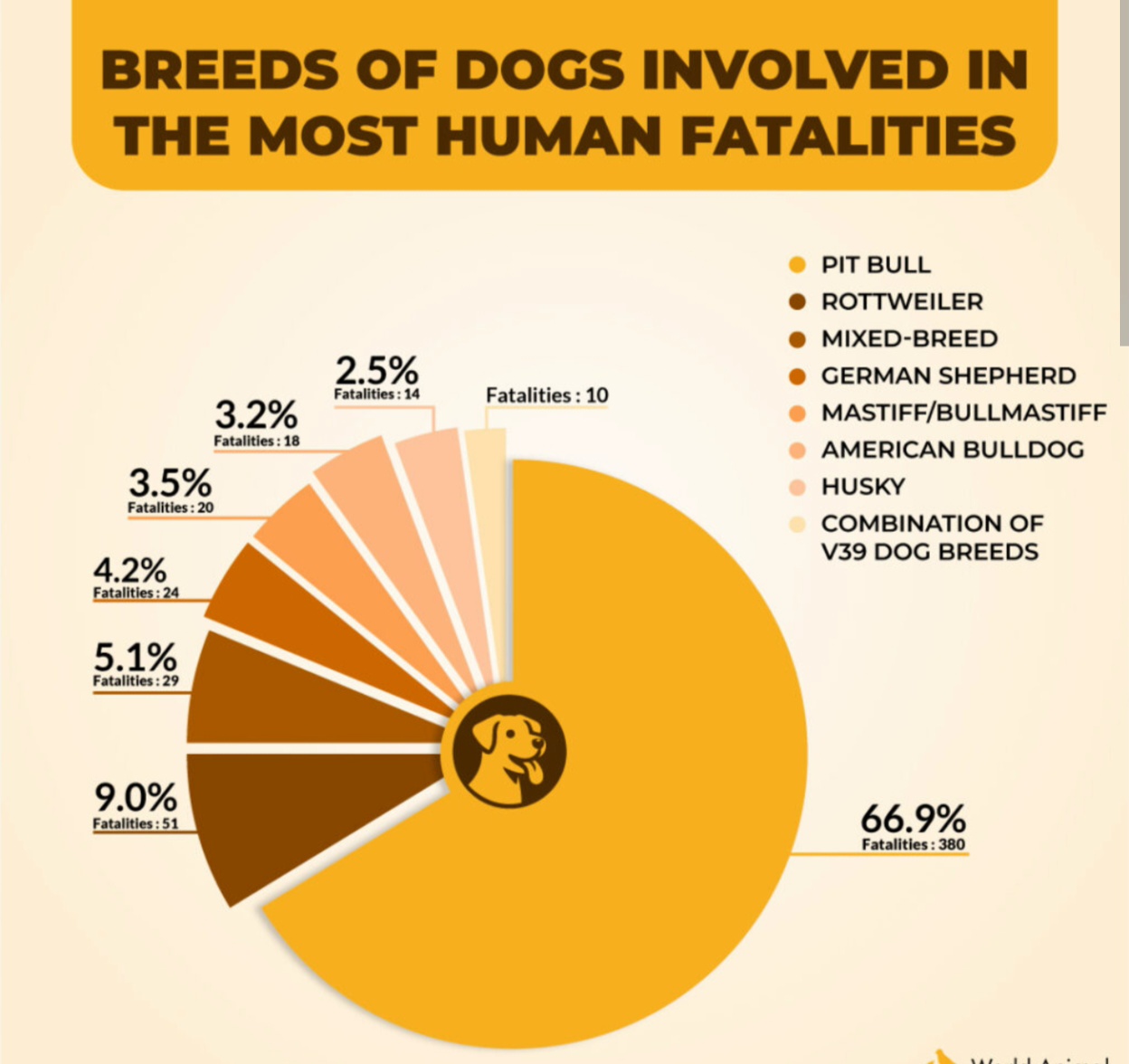
Please don’t treat the numbers above as verified or complete facts. Here’s why these kinds of statistics are widely questioned by veterinary behaviorists and animal welfare researchers:
- Breed identification is often guesswork. Many dogs involved in incidents are mixed-breed, and visual breed identification by witnesses, animal control, or media is frequently inaccurate, especially for dogs that resemble “pit bull” type breeds.
- Reporting bias skews the data. Attacks involving certain breeds tend to receive more media coverage, which can inflate perceived frequency compared to lesser-reported incidents involving other breeds.
- Population data is usually missing. Raw counts don’t account for how many dogs of each breed actually exist in a given area, so they can’t tell us the real rate of risk per dog.
- Context is rarely captured. These charts don’t show what led to the incident—provocation, chaining, lack of socialization, medical pain, or supervision failures.
Major veterinary and public health organizations, including the American Veterinary Medical Association, have cautioned against using breed alone to predict bite risk. A more accurate picture requires looking at the dog, the humans involved, and the environment together.
What Actually Influences Bite Risk
Any dog—regardless of breed or size—is capable of biting. What varies is the severity of injury a bite can cause, which is influenced by a dog’s size and strength rather than breed identity alone. Preventing bites means paying attention to the factors that actually drive behavior:
- Early socialization. Puppies who are exposed to a variety of people, animals, sounds, and environments during their critical developmental window tend to be more confident and less reactive as adults.
- Training and handling. Dogs who are taught clear, consistent cues using positive reinforcement are better equipped to cope with stressful situations.
- Responsible breeding practices. Breeding for temperament and health, not just appearance, reduces the likelihood of fear-based or unpredictable behavior.
- Supervision around children and guests. Even friendly dogs need an adult actively watching, not just “in the room,” whenever they interact with children.
- Secure containment and leash laws. Fences, gates, and leashes prevent dogs from being placed in situations where fear or territorial instincts can escalate.
- Resource guarding. Dogs may protect food, toys, or resting spots. Recognizing and managing this tendency early prevents conflict.
- Pain or illness. A normally gentle dog may snap or bite when in pain, so sudden behavior changes should prompt a veterinary checkup.
- Children’s behavior around dogs. Hugging, climbing on, startling, or approaching a dog while it’s eating or sleeping are common triggers that children often don’t recognize as risky.
- Owner responsibility. Consistent routines, meeting a dog’s physical and mental needs, and recognizing warning signs all fall on the people responsible for the dog’s care.
Practical Prevention: What Families Can Do
- Teach children to ask before petting any dog, including familiar family pets.
- Never leave young children unsupervised with a dog, even for a moment.
- Learn to recognize early stress signals in dogs, such as lip licking, yawning, turning away, or stiffening.
- Give dogs a safe, quiet space to retreat to when they need a break from activity or guests.
Practical Prevention: What Dog Owners Can Do
- Invest in early, positive-reinforcement-based training and ongoing socialization.
- Keep up with veterinary care, since pain and illness are common hidden triggers for aggression.
- Maintain secure fencing, gates, and leashes, and follow local leash laws.
- Manage resource guarding proactively, rather than waiting for an incident.
- Advocate for your dog by stepping in before a situation becomes stressful or overwhelming.
Practical Prevention: What Communities Can Do
- Support humane education programs that teach canine body language in schools and community centers.
- Enforce leash laws and containment requirements consistently, regardless of breed.
- Focus policy on individual dog behavior and owner accountability rather than breed-specific bans, which research shows are largely ineffective at reducing bites.
- Ensure accessible, affordable resources for training and veterinary behavior support exist locally.
After a Concerning Interaction
If a dog growls, snaps, or bites, it’s important to respond thoughtfully rather than with panic or punishment alone:
- Separate the dog and the person involved calmly, and attend to any injuries.
- Schedule a veterinary visit to rule out pain or illness as a contributing factor.
- Consult a qualified, certified positive-reinforcement trainer or veterinary behaviorist to assess the situation.
- Review and adjust the environment, routines, or supervision practices that may have contributed.
- Report genuinely dangerous situations, such as an unsupervised aggressive dog roaming a neighborhood, to local animal control so the community can respond appropriately.
A Call to Action: Choose Understanding Over Fear
Dog bites are rarely about a single cause, and they’re almost never about breed alone. They’re about missed signals, unmet needs, and moments where management broke down. The good news is that most of these factors are within our control. By focusing on behavior, supervision, and accountability—not fear of a label—we can build safer relationships between people and dogs.
Here’s how you can help today:
- Take time to learn canine body language so you can recognize stress before it escalates.
- Work with qualified, positive-reinforcement professionals for training and behavior support.
- Always supervise children around dogs, even dogs you trust completely.
- Speak up and report genuinely dangerous situations so communities can respond with care and effectiveness.
Every dog and every family deserves a safe, compassionate approach to prevention—one rooted in education, not fear.


Leave a Reply